n8n Cloud vs Self-Hosted: Which One Should You Choose in 2026?
Trying to decide between n8n Cloud and self-hosted n8n? Learn the key differences, real costs, pros, cons, and which option is best for your automation workflows.
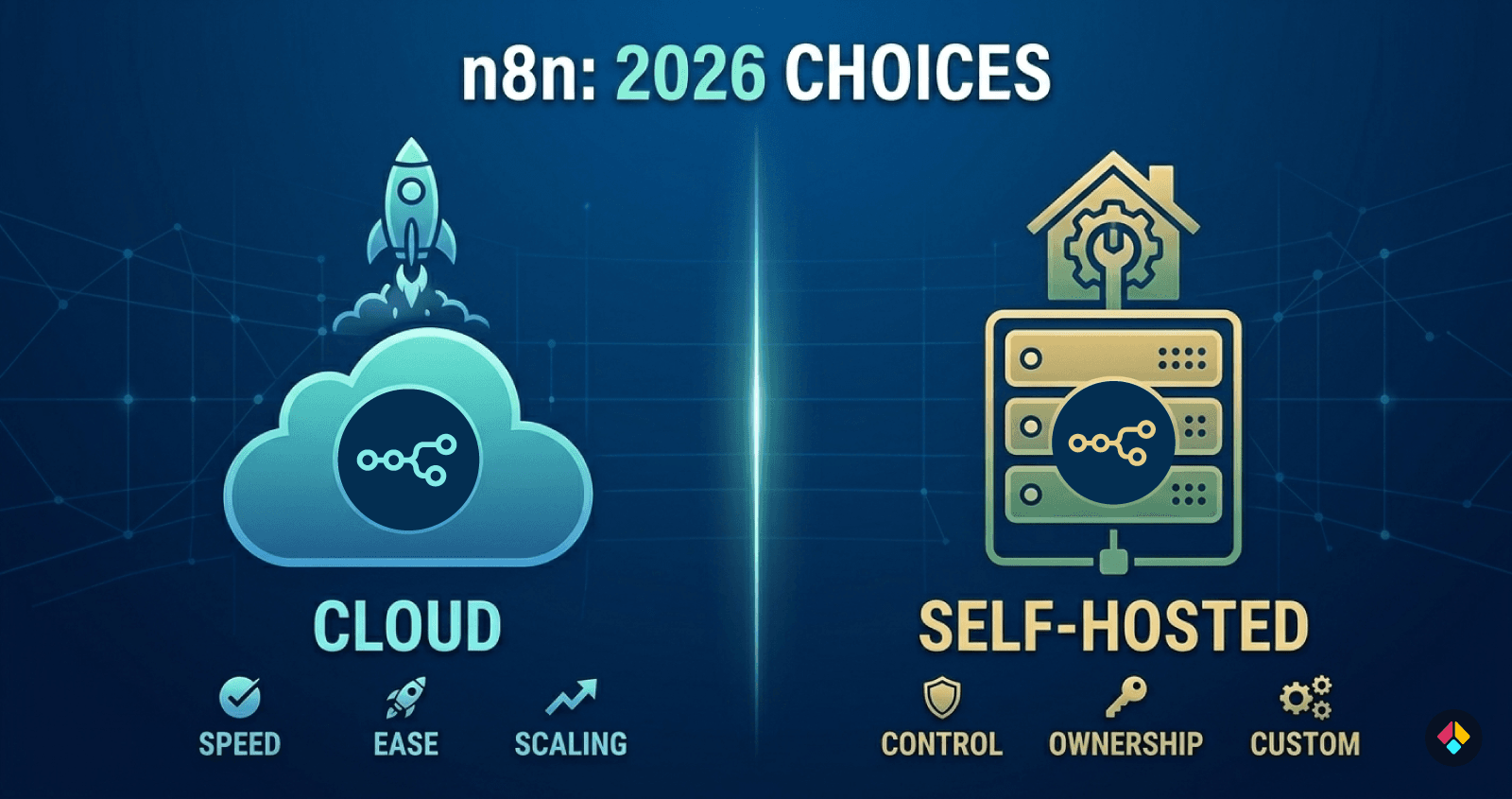
If you’re planning to automate workflows with n8n, one of the first decisions you’ll face is whether to use n8n Cloud or self-host n8n yourself.
Both options allow you to run workflows and automate processes, but they are very different in terms of setup, control, cost, and maintenance. While n8n Cloud provides a fully managed environment where everything is handled for you, self-hosted n8n gives you complete control over your infrastructure but requires managing servers and deployments.
In this guide, we’ll break down the key differences between n8n Cloud and self-hosted n8n, including the pros, cons, real costs, and which option makes the most sense depending on your needs.
Quick Answer: n8n Cloud vs Self-Hosted
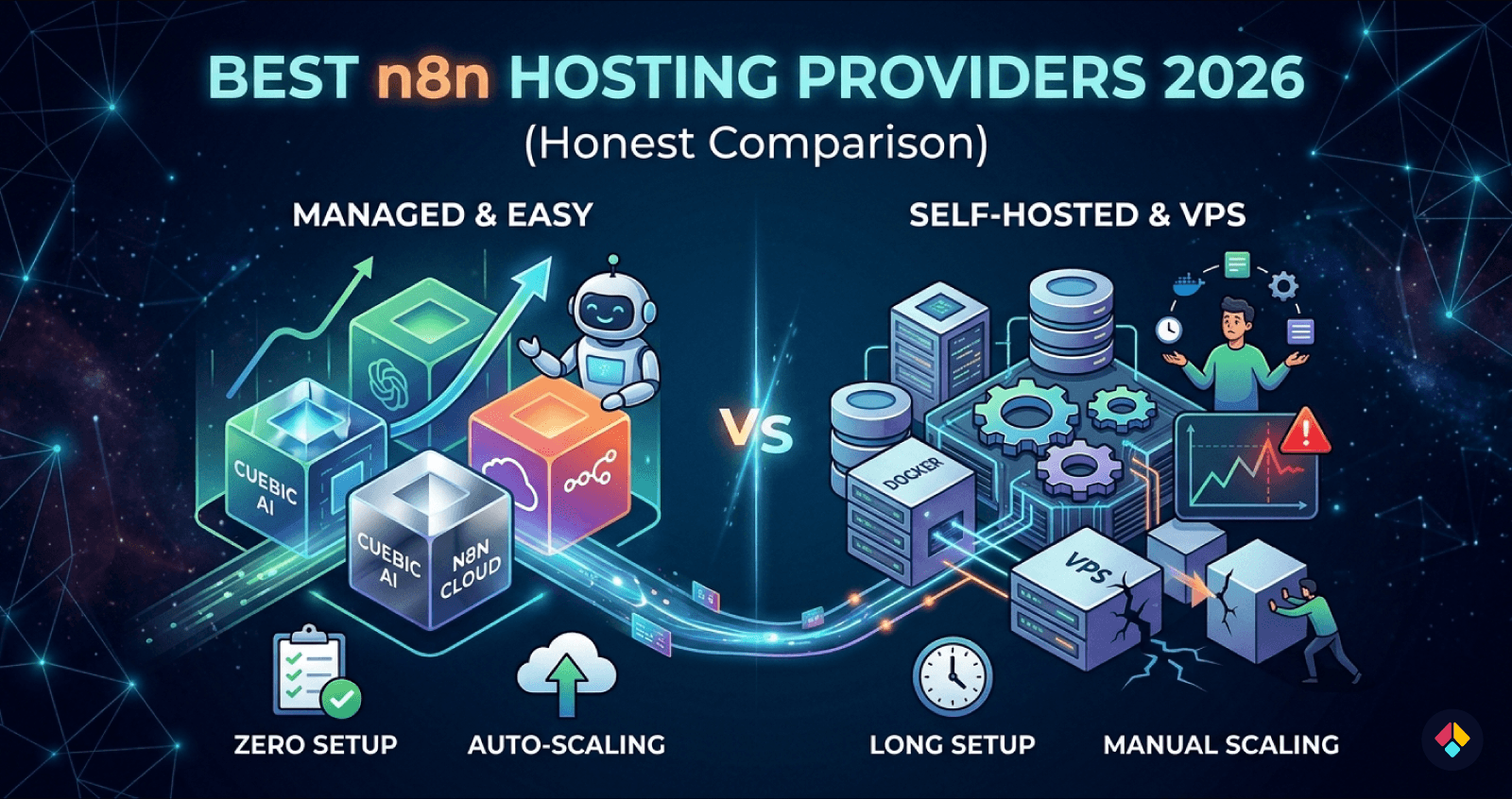
The main difference between n8n Cloud and self-hosted n8n is how the platform is hosted and managed.
n8n Cloud is the official hosted service provided by the n8n team. It allows you to start building workflows immediately without worrying about servers, updates, or infrastructure management.
Self-hosted n8n, on the other hand, means running n8n on your own server or VPS. This approach gives you full control over your environment but requires setting up and maintaining the infrastructure yourself.
In short, n8n Cloud is easier to start with, while self-hosting n8n offers more control and flexibility if you are comfortable managing servers.
What is n8n Cloud?
n8n Cloud is the official hosted version of n8n provided by the n8n team. Instead of installing and running n8n on your own server, you can simply create an account and start building workflows directly from the browser.
With n8n Cloud, the infrastructure is fully managed for you. This means the platform handles things like server setup, updates, security, and maintenance, allowing users to focus only on building automation workflows.
This option is particularly useful for beginners or teams who want to start using n8n quickly without dealing with technical setup. You don’t need to configure a VPS, install Docker, or manage databases — everything is already prepared in the cloud environment.
However, because the platform is managed for you, n8n Cloud operates as a subscription service and comes with certain limitations compared to running n8n on your own infrastructure.
What is Self-Hosted n8n?
Self-hosted n8n means running the n8n automation platform on your own infrastructure instead of using the official cloud service. This typically involves deploying n8n on a VPS, dedicated server, or cloud instance using tools like Docker.
When you self-host n8n, you are responsible for setting up and managing the entire infrastructure. This includes configuring the server, installing n8n, setting up databases, handling backups, managing updates, and securing the instance with SSL and proper access controls.
The biggest advantage of self-hosting n8n is complete control over your workflows and infrastructure. You can customize the environment, scale resources when needed, and integrate it with your own systems without platform limitations.
However, self-hosting also introduces additional complexity. Running n8n reliably in production often requires managing servers, monitoring performance, handling upgrades, and maintaining security, which can be challenging for users without DevOps experience.
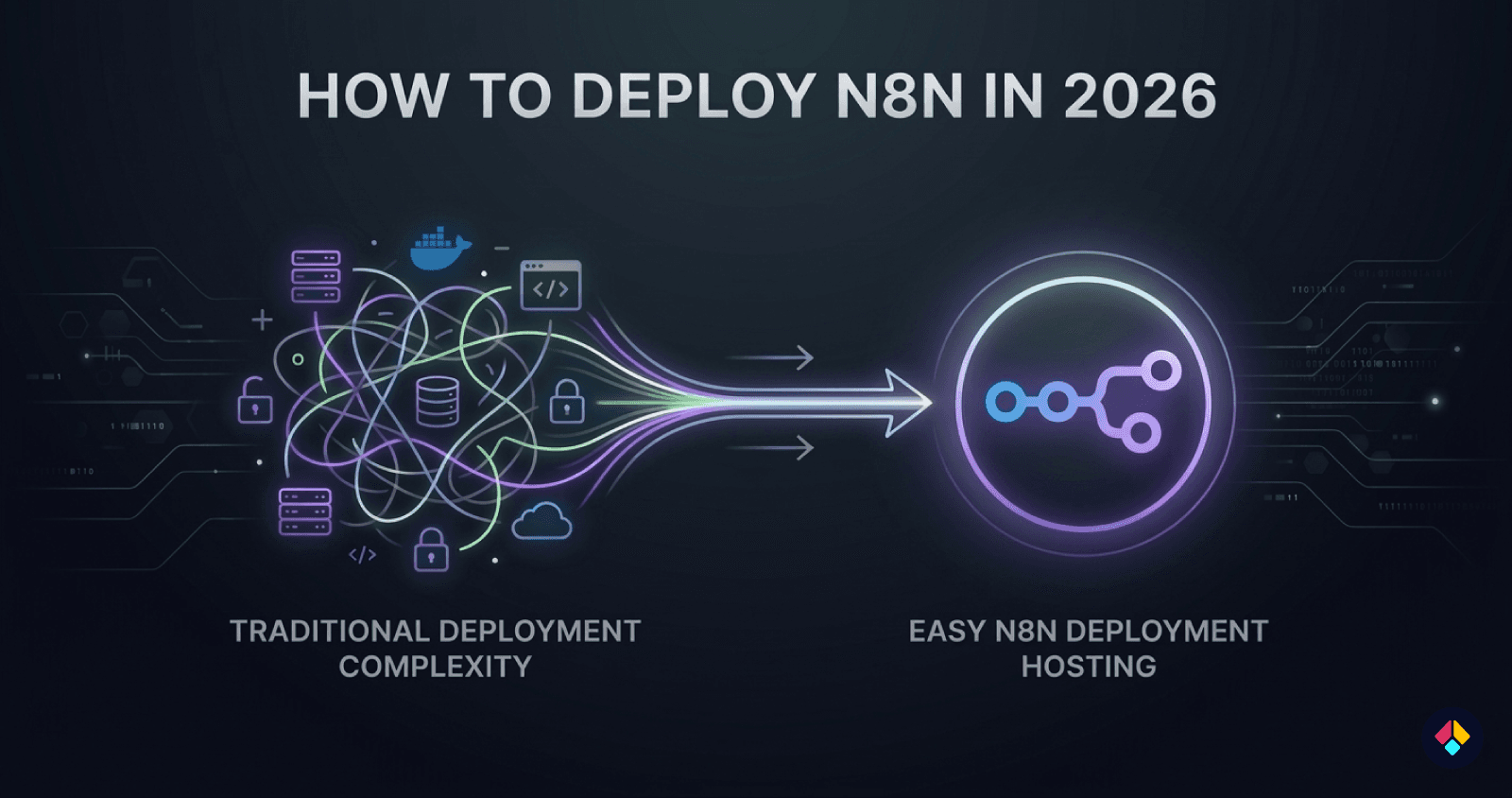
If you're looking for a simpler way to deploy n8n without dealing with complex server setup, you can follow this step-by-step guide on how to 👉 deploy n8n without server setup.
n8n Cloud vs Self-Hosted: Key Differences
When deciding between n8n Cloud and self-hosted n8n, the main differences come down to setup, control, maintenance, and cost. While both options allow you to build and run automation workflows, the way they are managed is very different.
The table below highlights the key differences between the two approaches.
| Feature | n8n Cloud | Self-Hosted n8n |
|---|---|---|
| Setup | Instant setup, no technical configuration required | Requires server setup and installation |
| Infrastructure | Fully managed by the n8n team | Managed by you |
| Control | Limited control over infrastructure | Full control over server and environment |
| Maintenance | Updates, backups, and security handled by the platform | You must manage updates, backups, and security |
| Scalability | Limited to platform plans | Can scale depending on your server resources |
| Cost Structure | Monthly subscription | VPS or server cost + maintenance |
Both options can work well depending on your needs. n8n Cloud focuses on simplicity and convenience, while self-hosted n8n focuses on flexibility and full infrastructure control.
Pros and Cons of n8n Cloud
Using n8n Cloud can be a convenient way to start building automation workflows quickly. Because the platform is fully managed, users don’t need to worry about server setup, updates, or infrastructure maintenance. However, the service operates on a subscription model with execution-based limits, which can affect cost as your automation grows.
Pros
Easy to get started – You can create an account and begin building workflows without installing or configuring anything.
Fully managed infrastructure – Server maintenance, updates, security, and uptime are handled by the n8n team.
Fast onboarding – Ideal for beginners or teams that want to start automating workflows immediately.
Reliable hosting – Since it is the official platform, stability and platform updates are handled centrally.
Cons
Execution limits – Plans are restricted by the number of workflow executions (for example, the Starter plan includes around 2.5k executions).
Pricing increases with usage – As workflow executions grow, users may need to upgrade to higher tiers, which increases monthly costs.
Limited infrastructure control – Users cannot modify server resources or customize the underlying environment.
Less flexibility for advanced setups – Custom infrastructure configurations and deeper system integrations can be harder to implement.
Pros and Cons of Self-Hosting n8n
Self-hosting n8n means running the automation platform on your own server or cloud infrastructure instead of using the official managed service. Many developers and automation builders choose this approach because it provides full control over the environment and workflow execution limits. However, self-hosting also requires managing the underlying infrastructure.
Pros
No execution limits imposed by a platform – Workflow executions are limited only by your server resources rather than a subscription plan.
Full infrastructure control – You can configure the server environment, database, and integrations exactly as needed.
Lower cost at scale – Running n8n on your own VPS can become more cost-effective when automation workloads grow.
Maximum flexibility – Developers can customize deployments, integrate internal systems, and control the entire architecture.
Cons
Requires server management – You need to set up and maintain the server, install n8n, configure databases, and manage updates.
Infrastructure responsibility – Security, backups, monitoring, and uptime become your responsibility.
More complex setup – Deploying n8n with Docker, reverse proxies, SSL, and queue workers can be challenging for beginners.
Ongoing maintenance – As workflows grow, scaling infrastructure and maintaining reliability requires additional technical work.
Real Cost Comparison
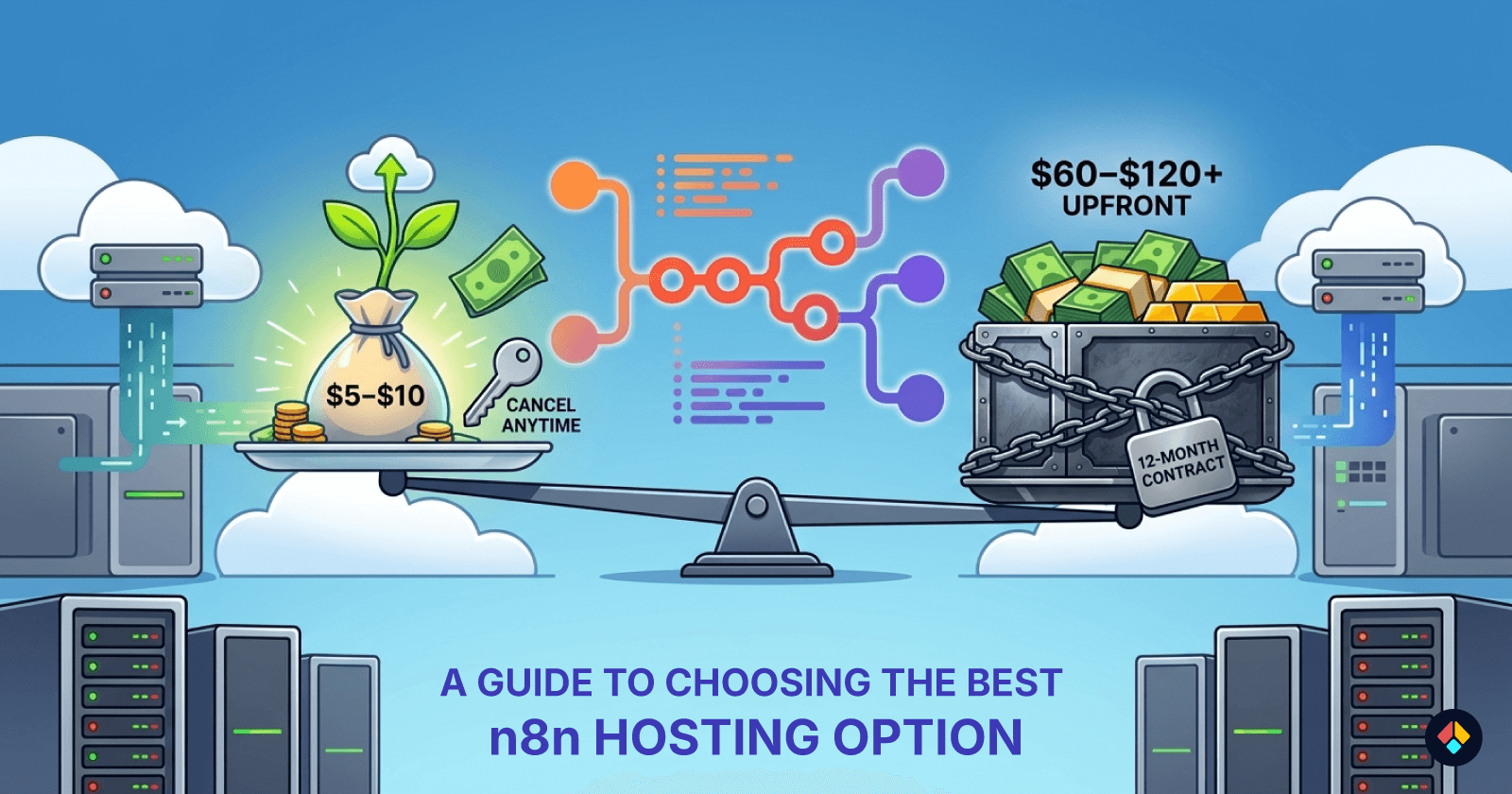
When deciding between n8n Cloud and self-hosted n8n, cost is often one of the biggest factors. At first glance, self-hosting may seem cheaper, but the real cost depends on infrastructure, maintenance, and workflow usage.
With n8n Cloud, pricing is based on subscription plans that include a certain number of workflow executions. For example, entry-level plans typically include a limited number of executions per month, and higher usage requires upgrading to larger plans. This makes the cost predictable, but it can increase as your automation grows.
On the other hand, self-hosting n8n usually requires running the platform on a VPS or cloud server. A basic VPS might cost anywhere from $5 to $20 per month, depending on the provider and server resources. However, the infrastructure cost does not stop there. You may also need to consider additional elements such as database services, backups, monitoring tools, and the time required to maintain the system.
In simple terms, n8n Cloud charges for convenience and managed infrastructure, while self-hosted n8n trades lower infrastructure costs for increased technical responsibility.
When Should You Use n8n Cloud?
n8n Cloud can be a practical option for users who want to start building automation workflows quickly without setting up their own infrastructure.
Because the platform is fully managed, the n8n team handles server maintenance, updates, and security. This allows users to focus mainly on building workflows rather than managing the underlying infrastructure.
You may consider using n8n Cloud if:
You want to get started quickly – The platform can be used immediately without installing or configuring servers.
You prefer a managed environment – Infrastructure maintenance, updates, and security are handled by the platform.
You are experimenting with automation – It can be a simple way to test workflows before committing to a more customized setup.
Your workflow usage fits within the plan limits – Execution-based plans may work well for smaller or moderate automation workloads.
However, as workflows grow or infrastructure customization becomes necessary, some users begin exploring alternatives such as self-hosting n8n for greater flexibility.
When Should You Self-Host n8n?
Self-hosting n8n can be a better option for users who want full control over their automation infrastructure. Instead of relying on a managed platform, self-hosting allows you to run n8n on your own server, customize the environment, and scale resources based on your needs.
You may consider self-hosting n8n if:
You need full control over your infrastructure – Self-hosting allows you to configure the server, database, and integrations exactly as required.
Your workflow executions are high – Since execution limits depend on your server resources, self-hosting can handle larger workloads.
You want more flexibility – Developers can customize deployments, integrate internal systems, and control how n8n runs.
You are comfortable managing servers – Setting up and maintaining infrastructure requires some DevOps or system administration knowledge.
However, while self-hosting provides flexibility and control, it also introduces additional responsibilities such as server maintenance, monitoring, updates, and security management.
The Problem With Both Options
Both n8n Cloud and self-hosted n8n can work well depending on your needs, but each option comes with its own trade-offs.
With n8n Cloud, the main advantage is simplicity. You can start building workflows quickly without worrying about infrastructure. However, this convenience often comes with execution limits, subscription pricing, and reduced control over the underlying environment.
On the other hand, self-hosting n8n provides complete control and flexibility. You can run unlimited workflows based on your server capacity and customize the infrastructure as needed. But this approach requires setting up servers, managing updates, handling security, and maintaining the system over time.
For many users, this creates a difficult choice:
either choose simplicity with limitations, or choose flexibility with infrastructure complexity.
This gap between convenience and control is one of the main reasons many automation builders start looking for alternative ways to run n8n.
An Easier Way to Run n8n
For many users, the challenge is not simply choosing between n8n Cloud or self-hosted n8n, but finding a solution that combines the advantages of both.
Ideally, you would want the simplicity of a managed platform without the execution limits and pricing tiers that often come with subscription-based services. At the same time, you may also want the control and flexibility of self-hosting without spending hours setting up servers, configuring Docker, managing databases, and maintaining infrastructure.
This is where platforms designed for simplified self-hosting start to make sense.
Platforms like Cuebic AI aim to make running n8n much easier by automating the entire infrastructure setup. Instead of manually configuring a VPS, installing Docker, setting up SSL, and managing deployments, users can launch a production-ready n8n instance with a single click.
The platform handles the infrastructure behind the scenes — including server setup, security configuration, and environment preparation — so users can focus on building automation workflows instead of managing servers.
Cuebic AI also provides a free trial, allowing users to test the platform before committing. Pricing is designed to be simple and transparent, making it easier to understand the cost of running automation workflows as usage grows.
In many ways, this approach offers a practical middle ground: the simplicity of managed hosting combined with the control of self-hosting infrastructure.
Final Thoughts
Choosing between n8n Cloud and self-hosted n8n ultimately depends on your priorities, technical experience, and the scale of your automation workflows.
If you want the simplest way to get started, n8n Cloud can be a convenient option since the infrastructure and maintenance are fully managed. However, execution limits and subscription pricing may become a factor as your automation usage grows.
On the other hand, self-hosting n8n provides complete control and flexibility. You can run workflows based on your server capacity and customize the environment as needed. But this approach also requires managing servers, handling updates, and maintaining the infrastructure yourself.
For many users, the ideal solution often lies somewhere in the middle — combining the ease of managed hosting with the flexibility of self-hosting. Platforms like Cuebic AI aim to simplify this process by allowing users to deploy and run n8n without dealing with the complexity of server management.
In the end, the best choice depends on how you prefer to balance convenience, control, and scalability when running your automation workflows.
Frequently Asked Questions
Is n8n Cloud free?
No, n8n Cloud is not free. It is the official hosted service provided by the n8n team and operates on a subscription model with execution-based plans.
However, n8n itself is open source and free to use. Anyone can download and run n8n locally on their own computer or host it on their own server.
Can n8n be hosted locally?
Yes. Because n8n is open-source, it can be installed and run locally on your own machine. Many developers run n8n locally for testing or small personal automations.
For production use, however, users often deploy n8n on a VPS or cloud server so workflows can run continuously.
Is self-hosting n8n cheaper?
Self-hosting n8n can be cheaper in some cases, especially when running a large number of workflows. However, the total cost depends on factors such as VPS pricing, server resources, backups, monitoring, and the time required to maintain the infrastructure.
Can beginners self-host n8n?
Yes, beginners can self-host n8n, but it may require some technical knowledge. Setting up n8n usually involves configuring a server, installing Docker, setting up SSL, and managing updates. For users without DevOps experience, this process can take time to learn.
What is the easiest way to run n8n?
The easiest way to run n8n is by using a managed platform where the infrastructure is already prepared. This removes the need to configure servers or maintain deployments. Platforms such as Cuebic AI aim to simplify this process by allowing users to deploy a production-ready n8n instance with minimal setup.
Which option is better: n8n Cloud or self-hosted?
Neither option is universally better — it depends on your needs. n8n Cloud is easier to start with because everything is managed, while self-hosted n8n offers more control and flexibility. Many users choose based on their technical experience and how much control they want over their infrastructure.
Do I need Docker to self-host n8n?
Docker is the most common way to deploy n8n in production because it simplifies installation, updates, and environment management. However, Docker is not strictly required. n8n can also be installed directly on a server using Node.js and npm, although this approach typically requires more manual setup and maintenance.